Stop Managing Your Oxidase Reagent's Cold Chain

TestOxidase™ stores at room temperature, reads in 30 seconds, and lasts 9 months — ISO 13485-manufactured and IVD-certified for CAP and CLIA accredited labs.

Order Now — $51.10/unit (PL.390, 15 ml)
ISO 13485:2016 / MDSAP CE IVD (98/79/EC) FDA Class I Exempt Room Temp Storage 9-Month Shelf Life
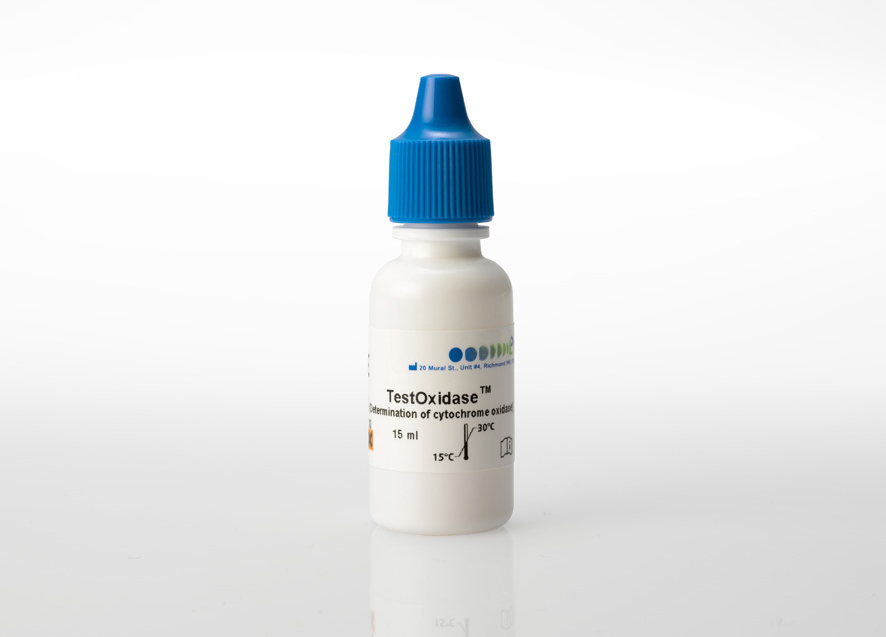
TestOxidase™ PL.390 — Ready-to-use oxidase reagent, 15 ml dropper bottle

Illustrative examples based on common customer feedback. Real references available on request.

Why Labs Choose TestOxidase™ PL.390

No Refrigerator. No Cold Chain. Ever.

TestOxidase™ PL.390 stores at 15–30°C — standard room temperature — eliminating the cost, monitoring burden, and compliance risk of cold chain management for a bench reagent.

Storage: 15–30°C — IFU, Storage section

A Full 30 Seconds to Read Results

The 30-second reading window gives every technologist adequate time to observe the color change fully — without the time pressure of the 10-second window specified in competing products' IFUs.

Read within 30 seconds — IFU, Procedure section; Hardy OxiDrop Z119 read window: 10 seconds — Hardy IFU

IVD-Certified, ISO 13485 — Accreditor-Ready

Manufactured under ISO 13485:2016 / MDSAP and CE marked to IVD Directive 98/79/EC, TestOxidase™ satisfies CAP and CLIA documentation requirements that lab-prepared TMPD solutions cannot meet.

ISO 13485:2016 / MDSAP; CE Mark 98/79/EC — regulatory filings
9

Nine Months of Usable Life, Per Bottle

With a 9-month shelf life from manufacture and ~350–400 tests per 15 ml, PL.390 delivers a predictable per-test cost without the daily waste of lab-prepared TMPD solutions that expire within 24 hours of preparation.

Shelf life: 9 months — IFU, Storage section; Yield: ~350–400 tests/15 ml — IFU, Yield section; Lab-prepared TMPD: 24-hour expiration

Eliminate Cold Chain Compliance Burden From a Bench Reagent

Cold chain management for a daily-use bench reagent adds temperature monitoring logs, refrigerator calibration records, and deviation reporting to your compliance overhead. TestOxidase™ stores at room temperature — 15–30°C — and carries a 9-month shelf life, removing those requirements entirely. Manufactured under ISO 13485:2016 / MDSAP and CE marked, it provides the IVD documentation trail your CAP or CLIA accreditor expects.

  • Room temperature storage (15–30°C) eliminates refrigerator monitoring logs for this reagent class.
  • ISO 13485:2016 / MDSAP and CE mark (98/79/EC) satisfy CAP/CLIA IVD documentation requirements — lab-prepared solutions do not.
  • 9-month shelf life from manufacture versus 24-hour expiration of lab-prepared TMPD — reducing reagent waste and reorder frequency.
Request a Quote for Your Lab

30 Seconds. No Refrigerator. No Reconstitution.

TestOxidase™ PL.390 is a ready-to-use liquid reagent — open the dropper bottle and apply. No reconstitution, no refrigerator wait time, no timer anxiety. The 30-second reading window is triple the read time of some competing dropper reagents, giving you the full observation window the test requires.

  • Ready-to-use liquid reagent — no reconstitution or dilution required before use.
  • 30-second reading window — observe color change fully before recording results; disregard changes after 30 seconds.
  • Apply to filter paper strip, disc, swab tip, or flood the plate directly — compatible with standard bench workflows.
See the Full Procedure (IFU) IFU en Español

One SKU. Room Temperature. Nine-Month Shelf Life.

TestOxidase™ PL.390 ships and stores at ambient temperature (15–30°C), eliminating cold pack requirements, temperature-controlled freight surcharges, and the receiving inspection burden for cold chain products. The 9-month shelf life from manufacture reduces reorder frequency and minimizes expired-reagent write-offs. Available in 15 ml (PL.390) and 125 ml (PL.390-125) formats to match your volume.

  • Ambient temperature storage and shipping — no dry ice, gel packs, or temperature-controlled freight required.
  • 9-month shelf life from manufacture — reduces expired inventory write-offs and emergency reorder events.
  • Available in 15 ml (PL.390, ~350–400 tests) and 125 ml (PL.390-125) formats — right-size purchasing to lab volume.
Get a Volume Quote (PL.390-125)

People Also Purchased

Pro-Loops™ Calibrated Inoculation Loops

Pro-Loops™

PLD001 / PLD010 — Single-Use Loops

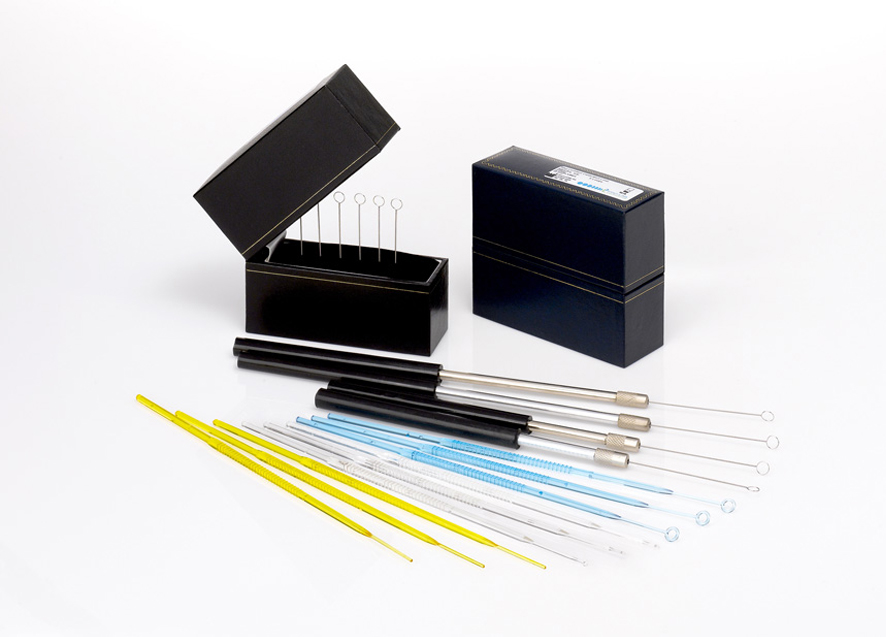
Single-use plastic inoculating loops required for oxidase testing — eliminate the false-positive risk from nichrome or iron-containing metal loops. Disposable, no flaming required.

View Pro-Loops™ →
Kovacs' Reagent PL.375

Kovacs' Reagent

PL.375 — 100 ml · $65.27

Used in the same gram-negative workup — spot indole test is typically run immediately after oxidase. CLSI M35-A2 aligned, room-temperature storage.

View Kovacs' Reagent PL.375 →
Microbank® PL.170C Cryopreservation System

Microbank® Preservation

PL.170C-Series

Store organisms confirmed by TestOxidase™ — cryopreservation bead system maintains viability for up to 8 years for QC reference cultures.

View Microbank® →

Product Specifications

Specification Value Source
Catalog Number PL.390 (15 ml) / PL.390-125 (125 ml) pro-lab-direct.com; Fisher Scientific
Price (15 ml) $51.10 USD pro-lab-direct.com; Fisher Scientific
CLIA Complexity Moderate Complexity Pending confirmation
Specimen / Test Material Pure bacterial isolates, 18–24 hours old, from non-selective non-differential media IFU — Procedure section
Result Time Read within 30 seconds IFU — Procedure section
Positive Control Pseudomonas aeruginosa ATCC 27853 IFU — QC section
Negative Control Escherichia coli ATCC 25922 IFU — QC section
Instrument Required None IFU — Procedure section
Active Ingredient 0.3% TMPD (N,N,N',N'-tetramethyl-p-phenylenediamine), CAS 100-22-1 SDS 2017-05-15, Section 2
Storage Temperature 15–30°C (room temperature; no refrigeration required) IFU — Storage section
Shelf Life 9 months from manufacture IFU — Storage section
Approximate Yield ~350–400 tests per 15 ml IFU — Yield section
Intended Use Qualitative; in vitro diagnostic use only IFU — Intended Use section
GHS Signal Word DANGER SDS 2017-05-15, Section 2
GHS Hazard Codes H225, H317, H319, H336 SDS 2017-05-15, Section 2
GHS Pictograms 🔥 ⚠ SDS 2017-05-15, Section 2
SDS Revision Date 2017-05-15 SDS 2017-05-15, Section 2
Regulatory — CE Mark IVD Directive 98/79/EC IFU — Intended Use section
Regulatory — QMS ISO 13485:2016 / MDSAP pro-lab-direct.com; Fisher Scientific
Regulatory — FDA Class I Exempt, 21 CFR 866.2660, Product Code JTO pro-lab-direct.com; Fisher Scientific
Regulatory — Canada Health Canada Registered pro-lab-direct.com; Fisher Scientific

Frequently Asked Questions

Read and record results within 30 seconds of applying the colony to the reagent — disregard any color change that appears after 30 seconds. A full 30-second window gives your team more time to observe the reaction clearly before recording; Hardy OxiDrop Z119 specifies a 10-second read window per its own IFU.

No. TestOxidase™ PL.390 stores at 15–30°C — standard room temperature — and does not require refrigeration at any point. This eliminates cold chain monitoring, temperature log requirements, and the risk of reagent degradation from temperature excursions during storage.

Do not use TestOxidase™ when testing strict anaerobes (the test requires atmospheric oxygen), when colonies were grown on glucose-enriched or differential media such as MacConkey agar or EMB (false-negative risk), or when you cannot use a platinum wire or wooden applicator for colony transfer (nichrome and iron-containing loops cause false positives). Also note that results for Haemophilus, Brucella, and Pasteurella spp. may be variable and should not be used as sole identification.

Oxidase-positive organisms include Pseudomonas, Neisseria, Aeromonas, Campylobacter, Vibrio, Alcaligenes, Moraxella, Helicobacter pylori, and Legionella pneumophila. All Enterobacteriaceae (E. coli, Klebsiella, Salmonella, Enterobacter, Proteus), Staphylococcus, Streptococcus, and Stenotrophomonas maltophilia are expected to be oxidase-negative.

Approximately 350–400 tests per 15 ml bottle, depending on application method (dropper application to filter paper, disc, or swab tip uses less volume per test than direct plate flooding). A 125 ml bulk format (PL.390-125) is available for higher-volume labs.

The primary confirmed differences are: (1) TestOxidase™ stores at 15–30°C vs. Hardy OxiDrop Z119's required 2–8°C refrigerated storage; (2) TestOxidase™ has a 30-second reading window vs. Hardy's 10-second window per their own IFU; (3) TestOxidase™ is CE marked and ISO 13485/MDSAP certified. Hardy's own IFU also flags variable results with Haemophilus — TestOxidase™ IFU notes the same limitation, so neither product resolves that limitation.

TestOxidase™ PL.390 is FDA Class I Exempt under 21 CFR 866.2660 (product code JTO) — it does not require a 510(k) premarket notification. It is CE marked to the IVD Directive 98/79/EC and manufactured under ISO 13485:2016 / MDSAP.

Run a positive control using Pseudomonas aeruginosa ATCC 27853 (expected result: purple/deep blue within 30 seconds) and a negative control using Escherichia coli ATCC 25922 (expected result: no color change within 30 seconds). QC frequency should follow your laboratory's standard operating procedures and accreditation requirements.

IVD Regulatory & Safety Information

“A qualitative method for the determination of bacterial cytochrome oxidase. For in vitro diagnostic use only.”

Principle of Test: TestOxidase™ contains N,N,N',N'-tetramethyl-p-phenylenediamine (TMPD) as the active chromogenic substrate. In oxidase-positive bacteria, cytochrome c oxidase catalyzes the oxidation of TMPD by atmospheric oxygen, producing Wurster's Blue — a purple indophenol compound visible within 30 seconds. Colorless reagent turning purple or deep blue indicates a positive result. No color change within 30 seconds indicates a negative result. The reaction requires the presence of atmospheric oxygen; the test is not valid for strict anaerobes.

DANGER
Code Category Plain English Description
H225 Flammable Liquid, Category 2 Highly flammable liquid and vapor — keep away from heat, sparks, and open flame; no smoking near reagent
H319 Eye Irritation, Category 2A Causes serious eye irritation — avoid contact with eyes
H317 Skin Sensitization, Category 1 May cause an allergic skin reaction with repeated or prolonged contact
H336 STOT SE, Category 3 May cause drowsiness or dizziness — use in well-ventilated area
Nitrile gloves
Safety glasses

Disposal: Dispose of as chemical waste in accordance with local, regional, and national regulations. Do not pour down drain.

SDS Revision Date: 2017-05-15

Procedure

Use fresh bacterial isolates that are 18–24 hours old, grown on non-selective, non-differential media (e.g., blood agar, tryptic soy agar). Do not use colonies from MacConkey, EMB, or other differential or glucose-enriched media.

Apply TestOxidase™ reagent to a filter paper strip, oxidase disc, or swab tip, or flood the plate directly with a few drops from the dropper bottle.

Using a platinum wire loop or wooden applicator stick, pick a well-isolated colony from the culture plate. Do NOT use nichrome or iron-containing inoculating loops — these will produce false-positive results.

Apply the colony to the reagent-treated surface (filter paper, disc, or swab) or to the reagent-flooded area of the plate.

Observe for color change and read the result within 30 seconds. Disregard any color change appearing after 30 seconds.

Results Interpretation

Result Observation Interpretation
Positive Purple or deep blue color within 30 seconds Cytochrome oxidase present — oxidase-positive organism
Negative No color change within 30 seconds Cytochrome oxidase absent — oxidase-negative organism
Invalid Control(s) fail to perform as expected Repeat test; review reagent storage, lot number, and expiration

Limitations

Quality Control Requirements

Organism Expected Result
Pseudomonas aeruginosa ATCC 27853 Purple or deep blue color within 30 seconds (Positive)
Escherichia coli ATCC 25922 No color change within 30 seconds (Negative)

QC frequency: Per laboratory standard operating procedures and applicable accreditation standards (CAP, CLIA, or equivalent). Each new lot number should be qualified with QC testing before use.

Ready to Order TestOxidase™ PL.390?

Ships ambient temperature. No cold chain required.

Order Now

Ships ambient temperature. No cold chain required.

Add to Cart to Get Price

Get a Volume Quote

Ask about PL.390-125 (125 ml bulk format) pricing for high-volume labs.

Get a Volume Quote

Book a Technical Call

Speak with a Pro-Lab specialist about your oxidase workflow, accreditation documentation, or switching from a competing product.

Book a Technical Call

Download SDS & IFU

Safety Data Sheet and Instructions for Use documentation.

Download SDS Download IFU (English) Descargar IFU (Español)