What are bacterial preservation beads, and how does Microbank® compare?
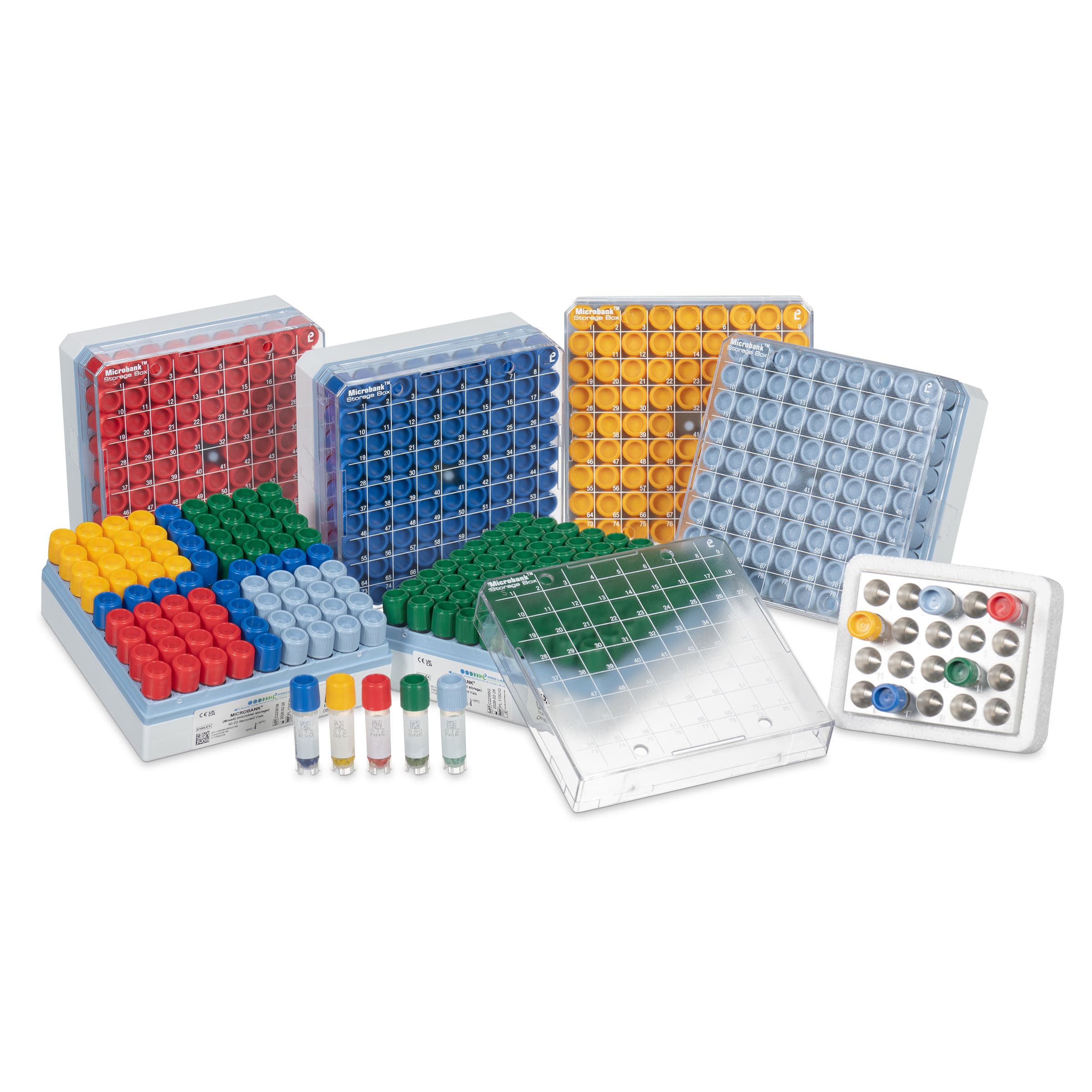
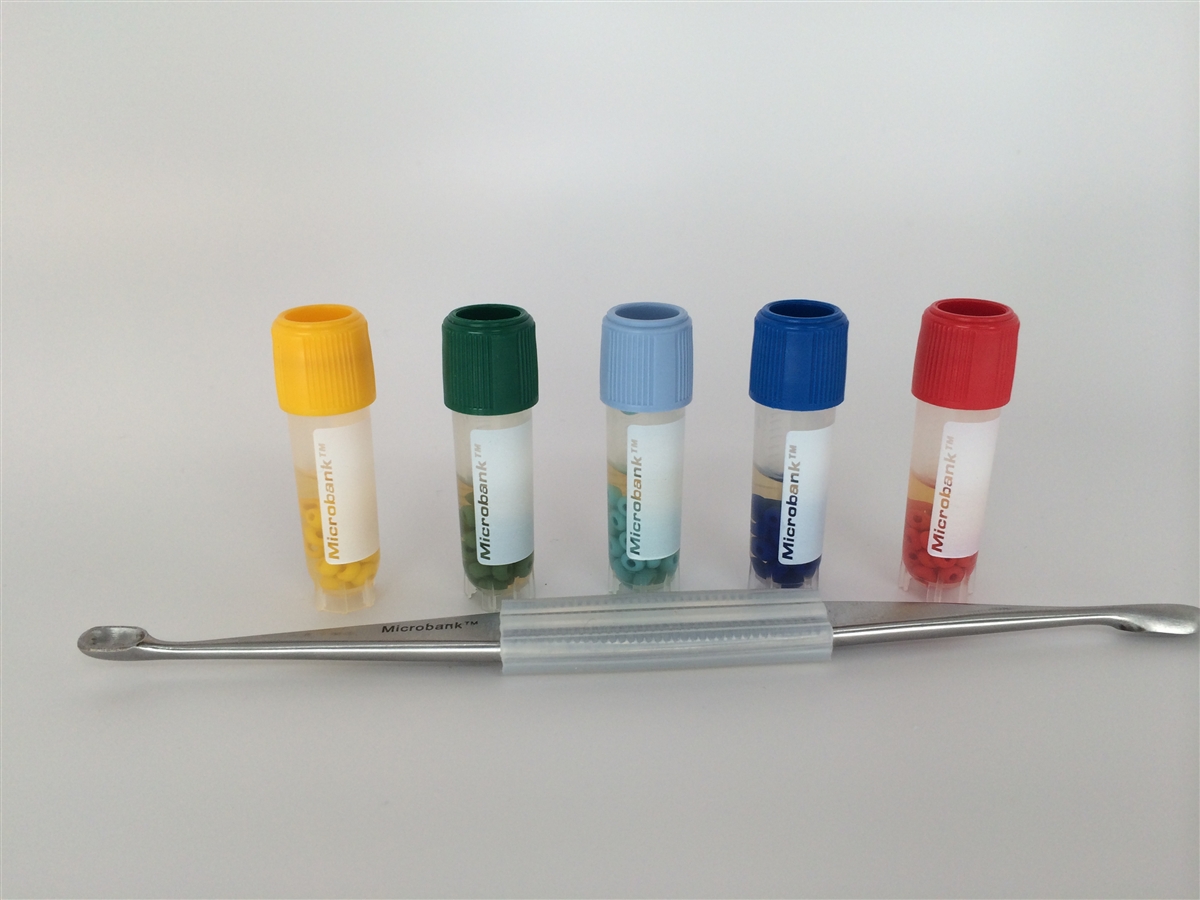
Bacterial preservation beads are small porous glass beads pre-treated with a cryopreservative. Bacterial or fungal isolates are inoculated into a vial of beads, the vial is frozen, and each bead holds one sub-culture. Microbank® bacterial preservation beads (PL.170C) give ~25 beads per vial — remove a single bead with a sterile needle, the remaining beads stay frozen and undisturbed, and there's no freeze-thaw cycling of the master stock. Three peer-reviewed JCM publications, validated at -20°C and -70°C/-80°C, cited as the preferred commercial method in Bailey & Scott's Diagnostic Microbiology.
Can Microbank® bacterial preservation beads be used in -20°C freezers?
Yes — validated at -20°C. An independent study at Manchester Metropolitan University showed all 41 NCTC/NCPF reference strains gave moderate to heavy growth from a single bead at 24 months stored at both -20°C and -80°C. No ULT freezer required. For best long-term results beyond 2 years, -70°C is recommended.
How long can I store cultures?
At -80°C: 100 diverse anaerobic bacteria viable after 10 years (UK PHLS ARU Cardiff). Yeasts and moulds: 97.8% yeast and 98.6% mould recovery up to 10 years (Espinal-Ingroff et al., J Clin Microbiol 2004; PMID: 15004063). Manufacturer claims storage data up to 25 years.
How many cultures can I get from one vial?
Each vial contains approximately 25 porous beads. Remove one bead per sub-culture with a sterile needle — the remaining beads stay frozen and undisturbed. Up to 25 identical sub-cultures from one stored organism.
Does Microbank® maintain organism characteristics like MRSA resistance?
Yes. MRSA methicillin resistance was maintained throughout a 2-year peer-reviewed study (Veguilla et al., J Clin Microbiol 2008; PMID: 18701656), conducted at University of South Florida and Florida Dept. of Health. Antifungal susceptibility MICs unchanged at 4 years in a study of 6,198 yeasts (PMID: 15004063).
Can Microbank® store fungi and yeasts?
Yes. In the largest published validation study for any commercial bead system, 6,198 yeast/yeast-like organisms and 391 moulds stored. Overall yeast recovery: 99.3%. Dermatophyte fungi validated (Baker & Jeffries, PMID: 16455912). Exception: Candida dubliniensis showed reduced recovery (33%) — do not store for reliable retrieval.
What is Microbank® Dry (PL.172) vs Standard?
Standard Microbank® (PL.170C) includes the proprietary cryopreservative solution — the basis for all published performance data. Microbank® Dry (PL.172) ships the same beads and vials without the cryopreservative, for labs that add their own preservation solution. All peer-reviewed studies used the standard cryopreservative formulation.
How does Microbank® compare to glycerol stocks?
The key difference is freeze-thaw cycling. Glycerol stocks require thawing the master stock for every sub-culture — each cycle risks viability loss and characteristic drift. Microbank® lets you remove one bead without thawing anything else. Bailey & Scott's Diagnostic Microbiology and the Manual of Clinical Microbiology cite Microbank® as the preferred commercial method over glycerol broth.
How does Microbank® compare to Copan CRYOBANK™?
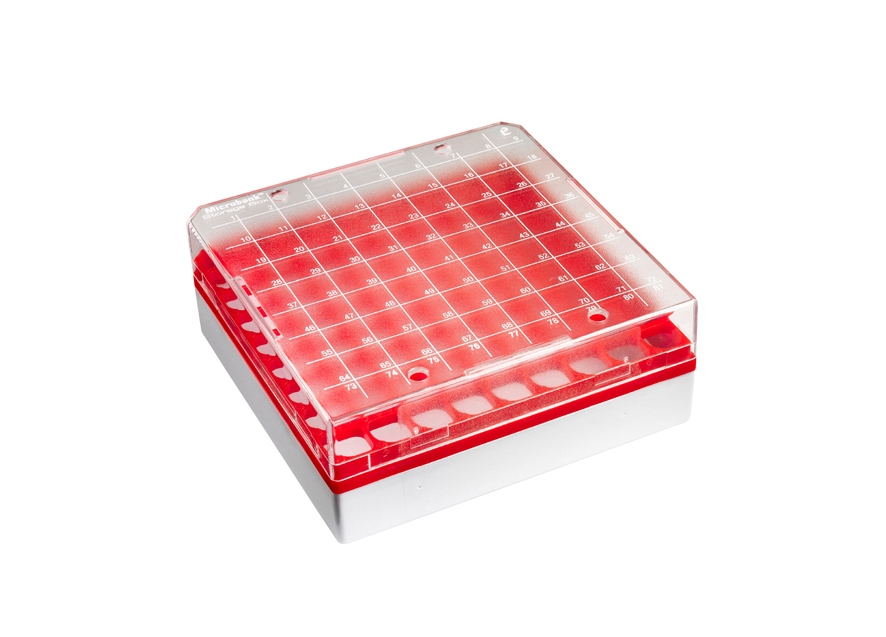
Three differences matter for accreditation and procurement. (1) Published validation: Microbank® has three peer-reviewed Journal of Clinical Microbiology publications (PMIDs 15004063, 16455912, 18701656); the Copan CRYOBANK™ product page cites zero published studies. (2) Storage range: Copan's own page limits CRYOBANK to -60°C and -80°C — there is no published Copan data for -20°C storage. Microbank® is validated at -20°C across 41 NCTC reference strains at 24 months (Manchester Metropolitan University), so labs without a ULT freezer can use it within its labeled range. (3) Procurement: Microbank® shows the $226.33 price online and ships next business day from Georgetown, TX. CRYOBANK requires a distributor quote with no published pricing. Both bead systems contain ~25 beads per vial and 80 vials per box; the validation evidence and ordering experience are where Microbank® differs.
When should Microbank® NOT be used?
Do not use the vial if: (1) it shows evidence of leakage (loss of cryopreservative), (2) there is excess turbidity in the cryopreservative suggesting contamination, or (3) the expiration date on the outer label has elapsed. Not validated as a transport device or diagnostic reagent. Candida dubliniensis shows significantly reduced recovery — do not store for reliable retrieval (IFU PL170C Rev. 2023-04).
Can I return a bead to the vial after removal?
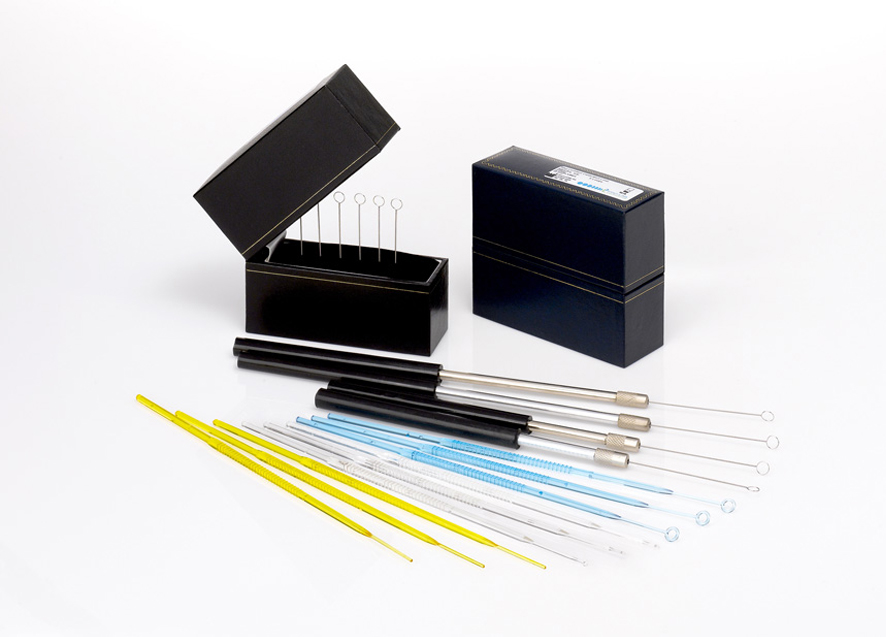
No. Beads must never be returned to the Microbank® vial for any reason (IFU safety precaution). Once a bead is removed for sub-culture, discard it after use. Returning a used bead risks contaminating all remaining stored isolates in the vial.
What culture age is recommended for inoculation?
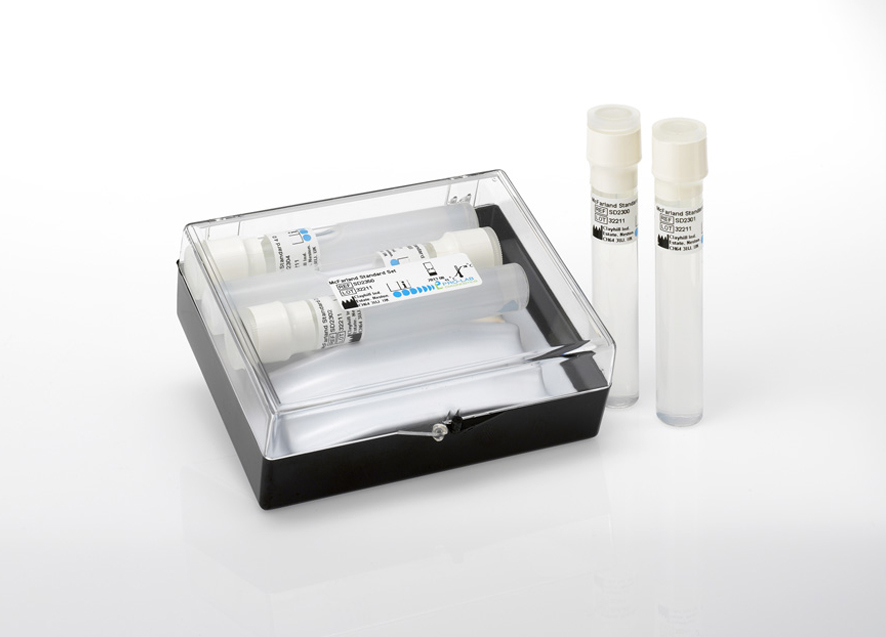
An overnight culture of 18–24 hours is preferred for inoculation. Pick colonies to achieve a 3–4 McFarland standard in the cryopreservative. Aseptic technique must be maintained at all times to ensure the continued integrity of the stored isolate (IFU PL170C Rev. 2023-04).
Is Microbank® a complete bacteria bank / biobank system for clinical labs?
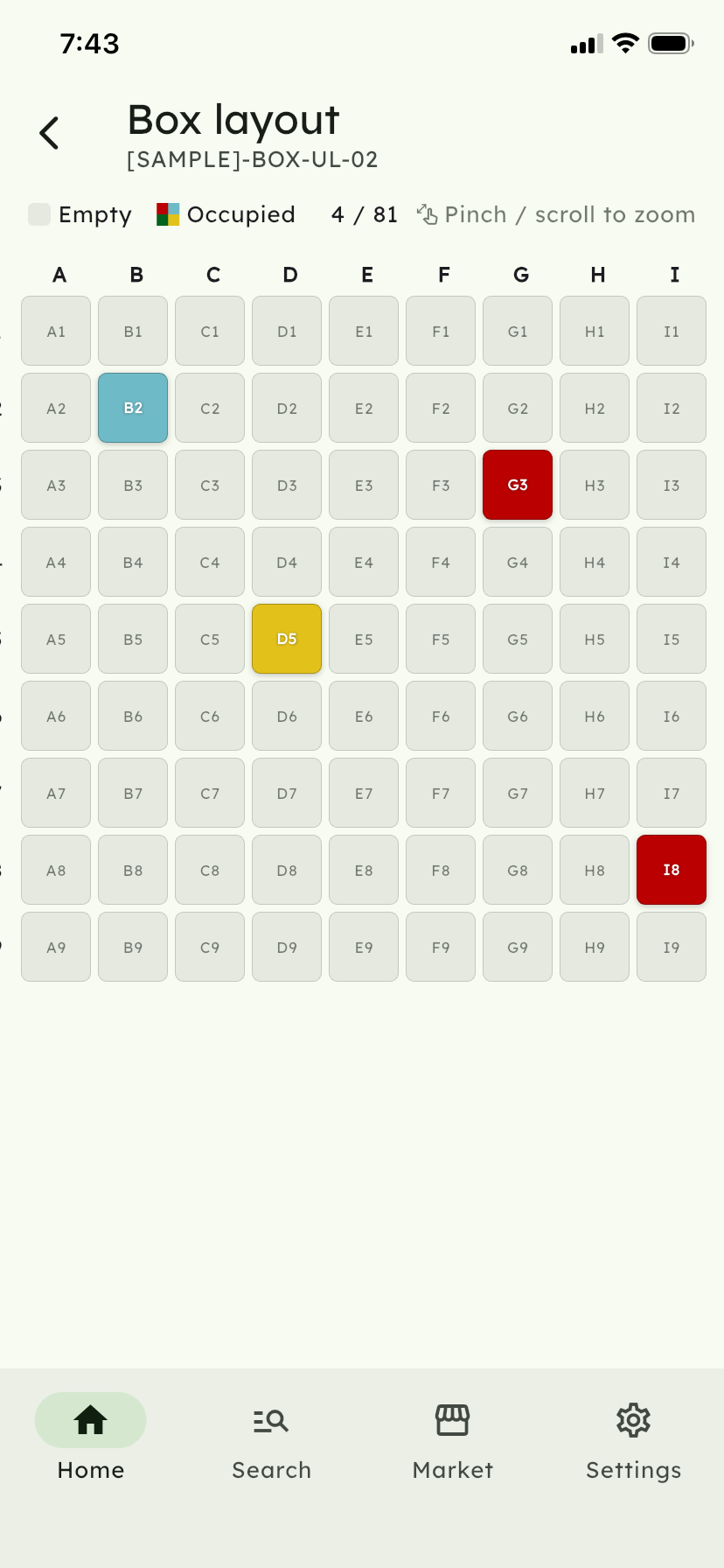
Yes. Microbank® functions as a long-term bacteria bank — each vial is a porous-bead biobank that stores up to 25 sub-cultures of one isolate. Reference laboratories use Microbank® as the backbone of their biobank freezer inventory: 100% of the 41 NCTC/NCPF reference strains were recovered at 24 months from -20°C and -80°C (Manchester Metropolitan University), and 100/100 anaerobes remained viable after 10 years at -80°C (UK PHLS Anaerobe Reference Unit). Combined with the Microbank® Marketplace inventory app, a single freezer rack becomes a fully indexed bacteria bank with 2D-barcode chain-of-custody for CAP and ISO 15189 audit.
What are cryobeads for bacteria, and how do Microbank® cryobeads differ from cryovials?
Cryobeads for bacteria are porous beads — typically chemically treated glass or ceramic — that adsorb a single bacterial sub-culture per bead inside a cryovial of preservation solution. Compared with a plain cryovial of glycerol broth, cryobeads let you withdraw one bead at a time with a sterile needle, so you can sub-culture 25 times from one vial without ever thawing the master stock. Microbank® cryobeads are the only system with three peer-reviewed Journal of Clinical Microbiology publications (PMIDs 15004063, 16455912, 18701656) demonstrating multi-year viability of anaerobes, yeasts, and antimicrobial-resistant pathogens including MRSA.